The Central Bank of Nigeria (CBN) has introduced updated foreign exchange (FX) guidelines as part of ongoing efforts to improve transparency, strengthen market confidence, and make the country's foreign exchange system more efficient for businesses and investors.
The revised framework forms part of the fourth edition of the CBN Foreign Exchange Manual, which updates procedures governing foreign exchange transactions and aligns Nigeria's FX administration with current economic realities and international best practices. The reforms also seek to reduce administrative bottlenecks and improve the ease of doing business.
What the New Guidelines Mean
According to the apex bank, the revised manual introduces clearer documentation requirements and updated operational procedures for participants in the foreign exchange market.
Among the notable changes are improved provisions for import and export transactions, adjustments to advance payment limits for imports, and simplified processes for certain remittance and trade-related transactions. The manual also includes measures designed to promote greater transparency and accountability in the FX market.
Potential Benefits for Small Businesses
Small and medium-sized enterprises (SMEs), particularly those that rely on imported raw materials, machinery, or equipment, could benefit from a more efficient and predictable foreign exchange framework.
Industry analysts say that reducing delays in FX processing and providing clearer operational guidelines may help businesses plan imports more effectively, manage costs, and improve productivity.
However, experts also note that access to foreign exchange will continue to depend on compliance with regulatory requirements and prevailing market conditions.
Focus on Transparency
The CBN stated that the updated framework is intended to strengthen confidence in Nigeria's foreign exchange market by improving governance, encouraging compliance, and promoting ethical market practices.
The bank has also introduced stronger monitoring and reporting requirements for authorised dealer banks to ensure that foreign exchange transactions are properly documented and conducted in line with regulatory standards.
Economic Significance
Economists believe that a transparent and efficient foreign exchange system is important for attracting investment, supporting local manufacturing, and facilitating international trade.
For businesses that depend on imported inputs, clearer foreign exchange procedures may reduce uncertainty and improve operational planning, although broader economic factors such as exchange rate movements and inflation will continue to influence business costs.
Looking Ahead
The latest reforms reflect the CBN's broader strategy to modernise Nigeria's financial system and improve confidence in the foreign exchange market. Businesses are encouraged to familiarise themselves with the updated guidelines and work closely with their financial institutions to ensure compliance with the new requirements.
As implementation continues, stakeholders will be watching closely to assess how the revised framework affects access to foreign exchange, investment, and economic growth in the months ahead.
Economy
CBN unveils new forex guidelines for SMEs
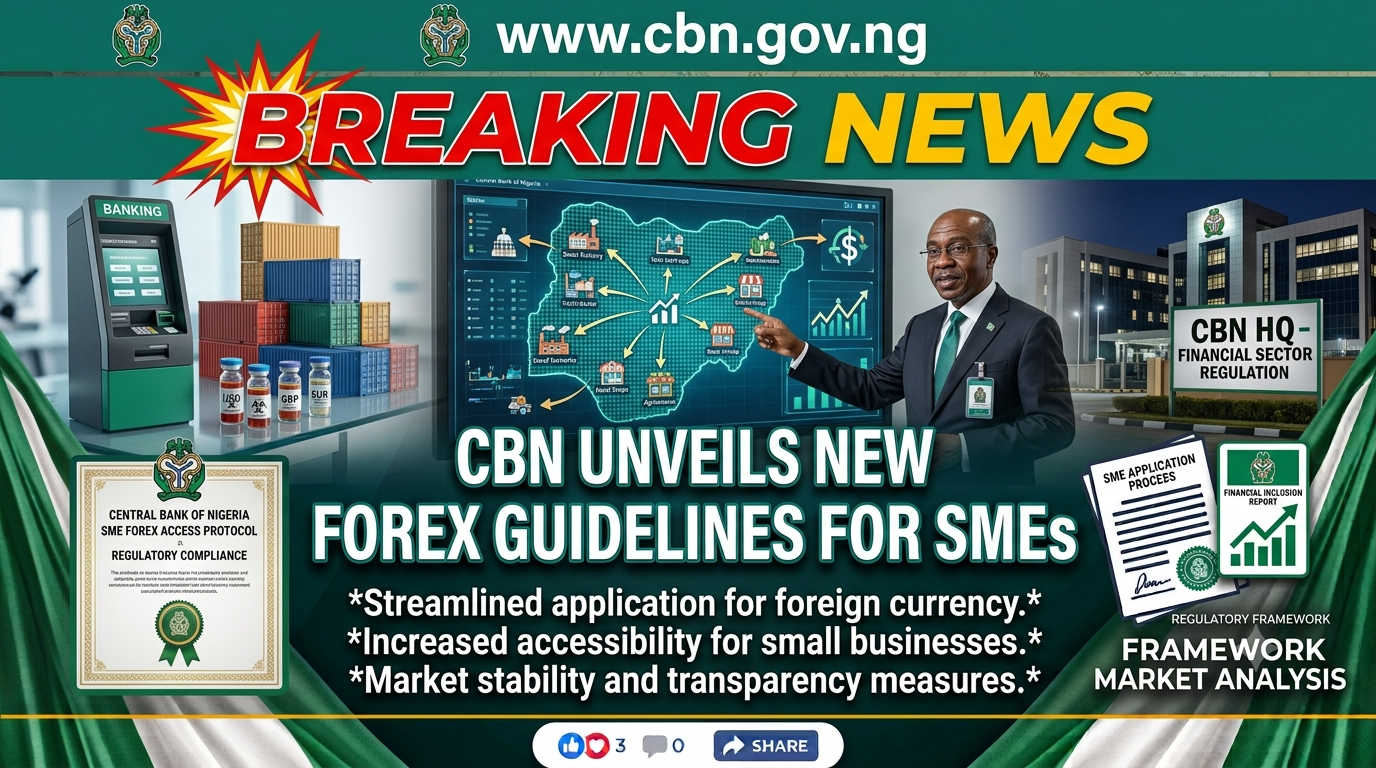
Featured image: CBN unveils new forex guidelines for SMEs
📢 Advertisement - In-Content